
Why Blue Matters
Tekhelet, Counterfeits, and the Protection of a Sacred Symbol

There are moments when history compresses itself into a symbol.
Not a slogan.
Not a flag.
A color.
This week on Madlik Disruptive Torah, we rebroadcast an episode about tekhelet, that rare, stubborn, unforgettable blue — a color that Judaism has been thinking about for a very long time.
As antisemitism re-enters public life, Jews are once again reaching for symbols. Simple ones. Quiet ones. Symbols that say: I’m here. I’m not hiding. And I’m not alone.

And here’s the thing: Judaism has always understood that power.
“In the Torah, blue is not decoration,” I say in the episode.
“It’s architecture — woven into the Mishkan. It’s authority — worn by the Kohen Gadol. And then it becomes something radical: it migrates from the sanctuary to the street, from the priest to every Jew.”
That migration is the story of tekhelet.
Blue as Architecture
The Torah does not introduce tekhelet casually. It saturates sacred space with it.
“Make the Tabernacle of ten strips of cloth… of blue, purple, and crimson yarns.”
— Exodus 26:1
Then:
“Make loops of blue wool on the edge…”
— Exodus 26:4
Then the inner curtain:
“You shall make a curtain of blue…”
— Exodus 26:31
Then the priestly garments:
“You are to make the tunic for the ephod entirely of blue.”
— Exodus 28:31
And even the Divine Name is suspended:
“On a cord of blue…”
— Exodus 28:36–37

As Rabbi Adam Mintz puts it:
“If you were to ask me what is the color of the Torah, I would tell you the color of the Torah is tekhelet.”
Blue is not aesthetic flourish.
It is visual theology.
From Priest to People
And then something radical happens.
The Torah takes this royal color — once restricted to sacred architecture and priestly authority — and democratizes it.
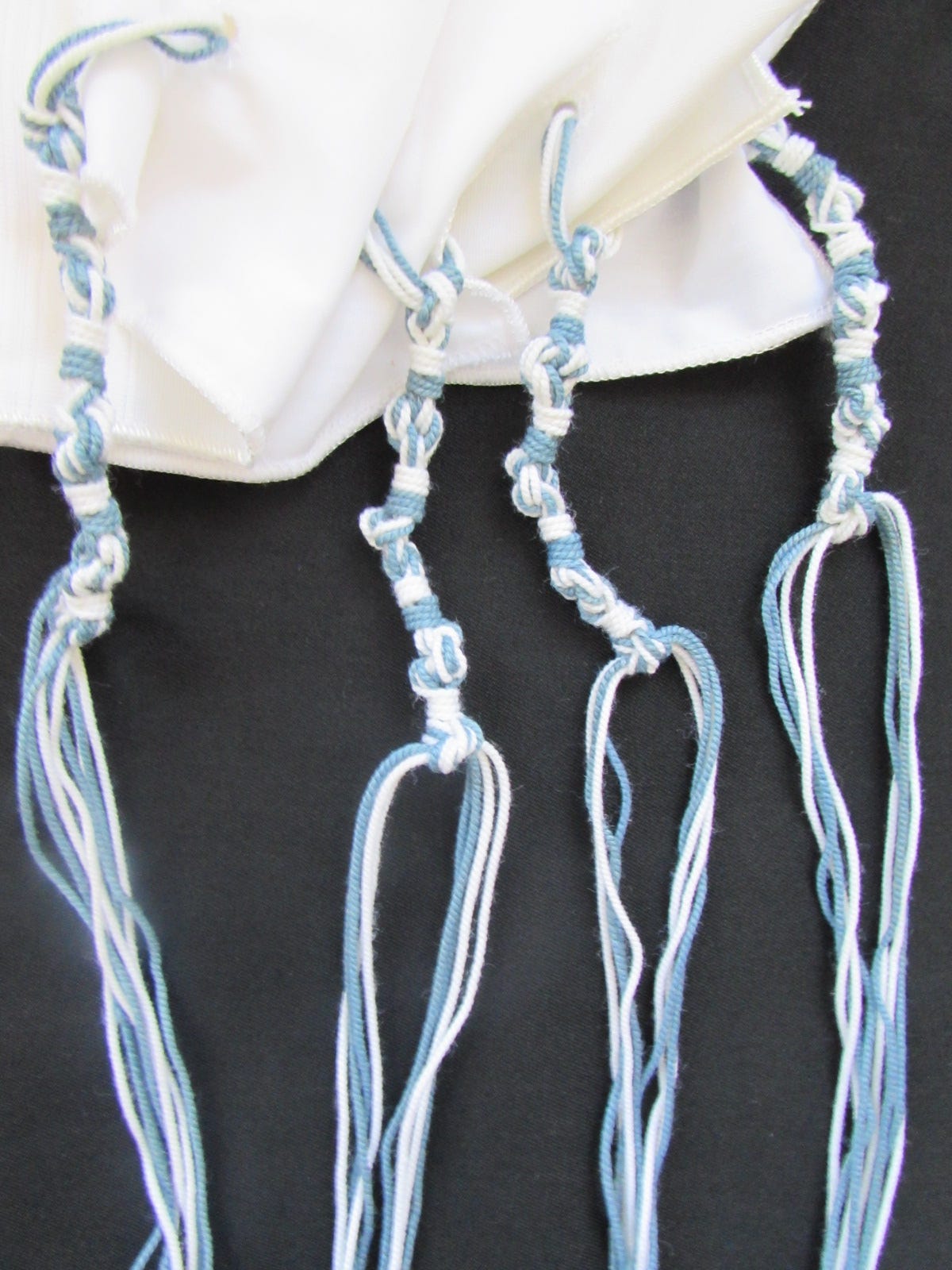
“Speak to the Israelite people… and let them attach a cord of blue.”
— Numbers 15:38
The purpose?
“Look at it and recall all the commandments of the Lord.”
— Numbers 15:39
Not priests.
Not elites.
Everyone.
One thread.
Exodus had already promised:
“You shall be to Me a kingdom of priests.”
— Exodus 19:6
Tekhelet is how that promise gets worn.
Architecture That Foreshadowed Its Own Absence
There is a strange phrase at the beginning of the Mishkan narrative.
God commands:
“Make Me a sanctuary that I may dwell among them.”
— Exodus 25:8
Not in it.
But among them.
The grammar is unsettling.
And yet the verse hints, maybe foreshadows that the structure itself is not the final dwelling place.
Among them.
In the episode, I found myself returning to that line:
“Maybe it foreshadowed a time already when you built the Temple, when you built the Mishkan, that you wouldn’t have it.”
Tekhelet follows that same trajectory.
At first it belongs to sacred architecture — woven into curtains, suspended from gold, draped across priestly garments.
Then the Torah does something radical.
It takes the color of the sanctuary and attaches it to the corners of ordinary clothing.
One thread.
On every Jew.
It is as if the Torah anticipated the day when there would be no Mishkan, no Temple, no ephod, no tzitz, no priestly cult.
When that day came, the architecture would be gone —
but the thread would remain.
The priestly blue would not disappear.
It would decentralize.
Just as God’s dwelling shifts from a structure to a people, tekhelet shifts from sacred space to social identity.
The Mishkan was portable.
The Temple was fixed.
The thread was already preparing for exile.
And perhaps that was the point all along.
Why Blue?
The rabbis famously ask the question:
“Why tekhelet? Because tekhelet resembles the sea; the sea resembles the sky; and the sky resembles the Throne of Glory.”
— Menachot 43b
Blue lifts the eye upward — sea to sky to transcendence.
But the story of blue is not just metaphor. It is economics. It is ecology. It is law.
Tekhelet was rare. It came from a Mediterranean mollusk. It was expensive. It was prestigious.
And where there is prestige, there is imitation.
The Counterfeit Blue
The Talmud already warns about counterfeit tekhelet. In Menachot 40a–44a, the rabbis distinguish between authentic dye and substitutes. This wasn’t theoretical — it was commercial reality.
Tekhelet was valuable.
As Rabbi Mintz observed in the episode:
“You only counterfeit things that are worth it.”
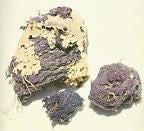
Yigal Yadin — Israeli general and archaeologist — excavated caves associated with the Bar Kochba revolt. Among tefillin and ritual objects, he found wool dyed deep blue. It seemed electrifying: Jews under Roman persecution preserving tekhelet.
But laboratory testing revealed something sobering.
The dye was not derived from the murex mollusk.
It was counterfeit.
Suddenly the Talmud’s warnings were not abstract. They were archaeological.
For centuries, we assumed tekhelet disappeared because the mollusk went extinct. The mitzvah became impossible to fulfill. White threads replaced blue.
But what if that assumption is wrong?
What if the species did not disappear?
What if the problem wasn’t extinction — but corruption?
Tekhelet required trust. A specific sea creature. Skilled extraction. Honest distribution. If counterfeit dye flooded the market, ordinary Jews could not distinguish authentic from fake. The commandment itself became compromised.
And here is the disruptive possibility:
What if the rabbis did not lose tekhelet —
what if they canceled it?
Not because it was gone.
But because it was corrupted.
Halakhah has precedent for suspending practices when integrity collapses. Better white and honest than blue and fraudulent.
If so, the disappearance of tekhelet was not defeat.
It was protection.
Halakhah has precedent for this kind of intervention.
In Sukkah 34b (see also 41b in some printings), the Talmud records that myrtle branches used for the lulav had become exorbitantly expensive. Merchants were exploiting the mitzvah. The rabbis responded with an extraordinary move: they threatened to redefine what qualified as a valid hadas if price gouging continued.
In other words, they were prepared to adjust the law in order to break a corrupt marketplace.
“If they continue to charge excessively, we will permit even inferior myrtle branches.”
The Blue Was Hidden
The Midrash records simply:
“Tekhelet was hidden.”
— Midrash Tanchuma, Shelach 15
Hidden by history.
Or hidden by law.
For centuries, Jews wore white.
Not because they forgot blue —
but because they remembered it.
As I reflect in the episode:
“Sometimes what a symbol means is not only what it shows… but what it remembers.”
The white tallit became a monument to absence.
And absence, too, teaches.
Ecology and Covenant
Tekhelet depends on a living creature.
Which means a mitzvah depended on biodiversity.
If we fail as guardians of creation, we don’t just lose species — we lose commandments.
That is not environmentalism as fashion.
That is covenant.
From Tallit to Flag
Modern Zionism instinctively reached for this palette.
The Israeli flag did not invent blue. It inherited it — from the tallit, from the thread, from the Mishkan.
Rabbi Herzog’s prayer for the State of Israel calls it:
“Reshit tzmichat ge’ulateinu” —
“The beginning of the sprouting of our redemption.”
Sprouting.
Not exploding.
Not conquering.
Sprouting.
Blue does not shout.
It persists.
A Whisper of Resilience
Empires tried to erase Jewish symbols.
The Temple fell.
The dye vanished.
And still — the thread survived.
Tekhelet was once royal.
The Torah made it ours.
So when Jews choose blue today — on a tallit, on a flag, or even in a small square — it is not nostalgia.
It is memory.
It is identity.
It is refusal.
Blue is not decoration.
It is declaration.
Sefaria Source Sheet: https://voices.sefaria.org/sheets/383005
Listen on Spotify: